TWIL #017 - Prototaxites: The 8-Metre Mystery Organism
Before forests existed, a mysterious organism stood nearly three storeys tall. For 150 years, nobody could agree on what it actually was.
- #paleontology
- #biology
- #evolution
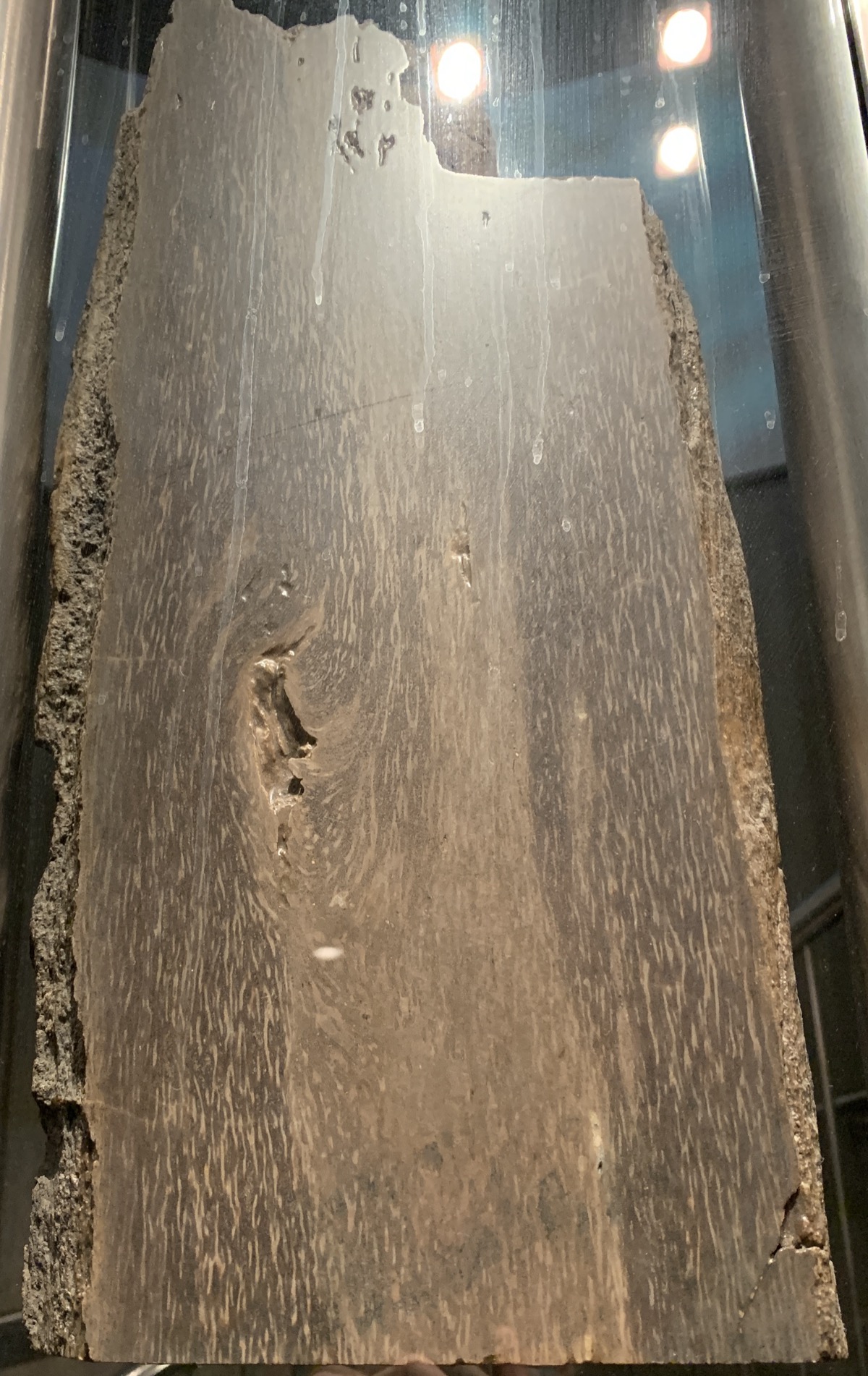
About 420 to 350 million years ago - in the Silurian and Devonian periods - a towering organism called Prototaxites dominated the landscape. It grew up to 8.8 metres tall and about a metre in diameter. There was nothing else remotely that size on land at the time. Vascular plants had only just begun colonising the continents, and most vegetation barely reached ankle height.
For over 150 years after its discovery in 1859, scientists argued over what it actually was. Early analysis suggested it was a conifer. Later hypotheses proposed a giant alga, a rolled-up mat of liverworts, or a massive lichen. Current evidence - particularly carbon isotope analysis - points most strongly to it being a giant fungus, specifically a type of massive fungal fruiting body.
The isotope chemistry is the key: Prototaxites wasn't photosynthesising, which eliminates plants and algae. But it also doesn't behave quite like any fungus we know - it produced wood-like growth rings, which fungi don't normally do. The case is still technically open.
The world it inhabited makes it even stranger. Land vertebrates didn't exist yet. Insects had only just appeared. True trees hadn't evolved. And yet this organism stood nearly three storeys tall in a landscape of low mosses and ferns, dwarfing everything around it, its purpose and biology still not fully understood today.