TWIL #046 - The Hummingbird's Heart Beats 1,260 Times per Minute
To sustain hovering flight, hummingbirds run the highest mass-specific metabolic rate of any warm-blooded animal - then shut it nearly off every night to survive until morning.
- #animals
- #biology
- #nature
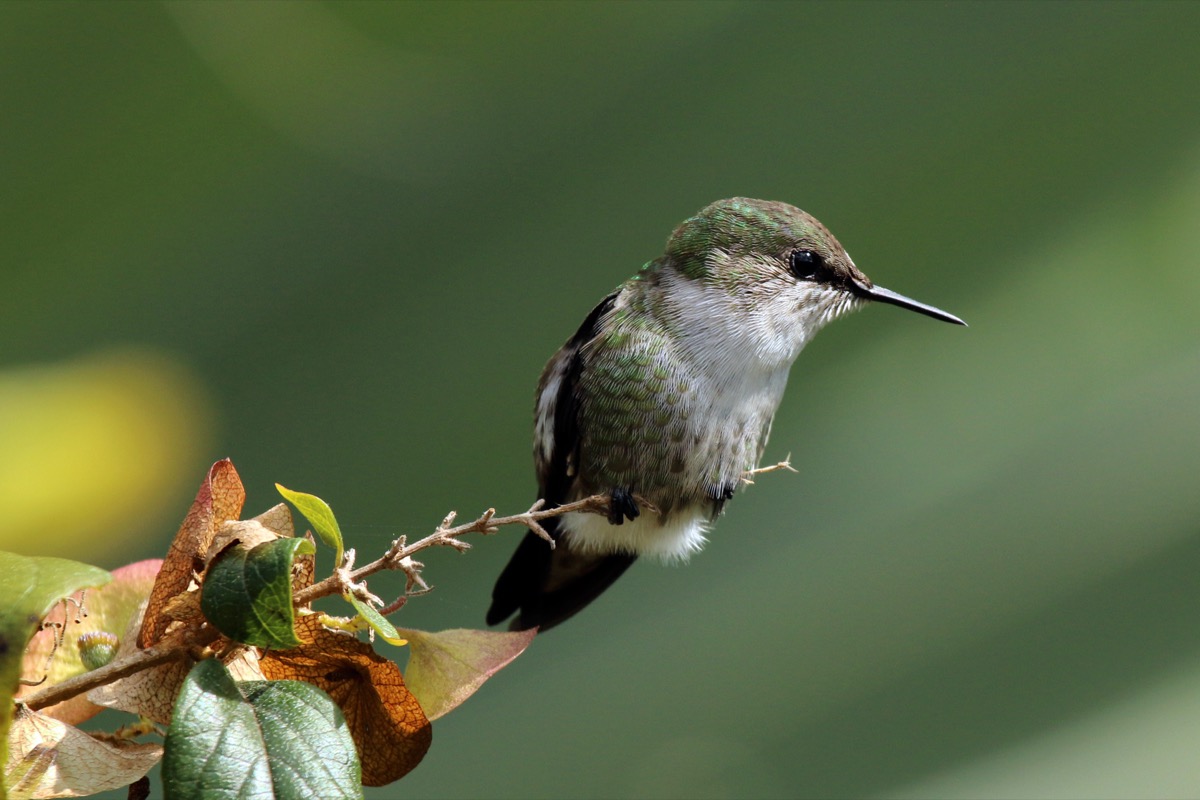
The vervain hummingbird (Mellisuga minima), native to Jamaica and Hispaniola, is the second-smallest bird in the world. Its biology illustrates, in extreme miniature, what hummingbirds as a group have had to evolve to sustain hovering flight.
Heart rate: A hummingbird's heart beats up to 1,260 times per minute during active flight. For comparison, a human heart beats around 60–100 times per minute at rest. The heart itself makes up around 2.5% of the bird's body mass - a greater proportion than almost any other vertebrate.
Torpor: Here is the survival problem - a hovering hummingbird burns energy at a rate that would exhaust its fuel reserves within hours. To survive each night without feeding, most hummingbirds enter torpor: a controlled metabolic depression where body temperature drops to near ambient (sometimes below 10°C), heart rate falls to around 50–180 bpm, and oxygen consumption drops by 95%. They appear comatose. Emerging from torpor takes 20–60 minutes and requires shivering to generate heat. Without this nightly shutdown, they would starve before dawn.
Wings: Hummingbird wings beat 50–80 times per second for most species (up to 200 times per second in the bee hummingbird during courtship dives). Uniquely among birds, they generate lift on both the downstroke and the upstroke - the wing rotates at the shoulder joint to maintain angle of attack in both directions. This gives them true hovering and the ability to fly backwards, which no other bird can sustain.
Memory: Hummingbirds remember the location of every flower in their territory and approximately how long ago they visited it - allowing them to time returns to coincide with nectar replenishment. This spatial memory is linked to the proportionally large hippocampus observed in these birds.
Daily intake: A hummingbird must consume roughly its own body weight in nectar each day, visiting hundreds to over a thousand flowers.