TWIL #052 - The Pirahã Language Has No Numbers, No Colour Words, and No Myths
The Pirahã people of the Amazon have a language so stripped down it challenged the most influential theory in modern linguistics - and the debate is still not settled.
- #language
- #linguistics
- #science
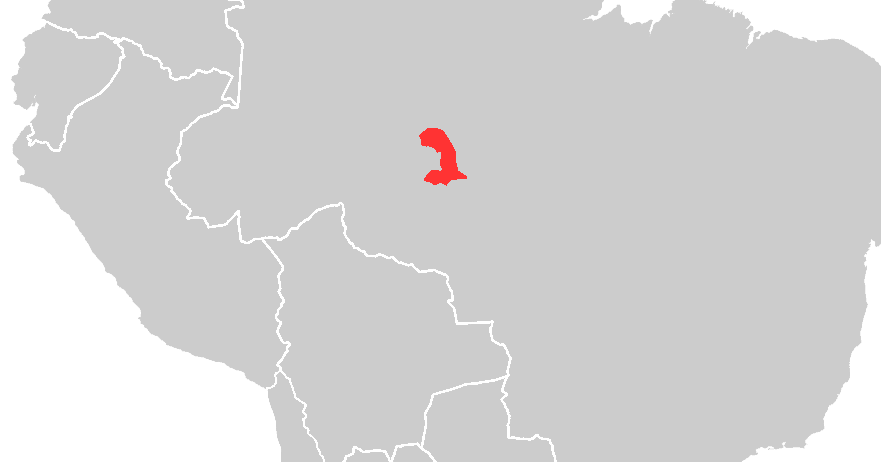
The Pirahã (pronounced approximately "pee-da-HAN") are an indigenous group of roughly 300–700 people living along the Maici River in the Brazilian Amazon state of Amazonas. Their language has been studied extensively since the 1970s, primarily by linguist and former missionary Daniel Everett, who spent decades living with the community.
What he found there sparked one of the most contentious debates in modern linguistics.
The language itself:
- The Pirahã language has one of the smallest phoneme inventories of any known language: 8 consonants and 3 vowels for male speakers (7 consonants for women). Much of the spoken language can also be hummed, whistled, or sung - a practical adaptation for communication while fishing or moving through the forest.
- It reportedly has no words for specific numbers - only approximate terms meaning something like "few" and "many." Studies attempting to teach Pirahã speakers to count to ten over eight months showed no success.
- It has no colour terms beyond rough categories of light and dark.
- There is no perfect tense and no grammatical means to discuss the distant past.
The "immediacy of experience" principle: Everett argues that Pirahã culture has a strict rule: you can only assert things that you personally witnessed, or that someone currently alive witnessed and told you. This means no creation myths, no stories about distant ancestors, no speculation about the deep past. The language reflects and enforces this - it cannot grammatically make such claims.
The Chomsky challenge: Noam Chomsky's influential theory of Universal Grammar holds that all human languages share a set of deep structural properties, including recursion - the ability to embed clauses within clauses ("the man [who saw the woman [who caught the fish]] left"). Everett claimed Pirahã has no recursion, which would make it a direct counterexample to the universality claim. This ignited a fierce academic dispute that involved public exchanges between Everett and prominent MIT linguists and remains unresolved.