TWIL #059 - Two-Thirds of an Octopus's Neurons Are in Its Arms
An octopus has about 500 million neurons - roughly the same as a dog - but 350 million of them are not in its brain. They're distributed across its eight arms, which can act, taste, and decide semi-independently.
- #animals
- #biology
- #marine-biology
- #nature
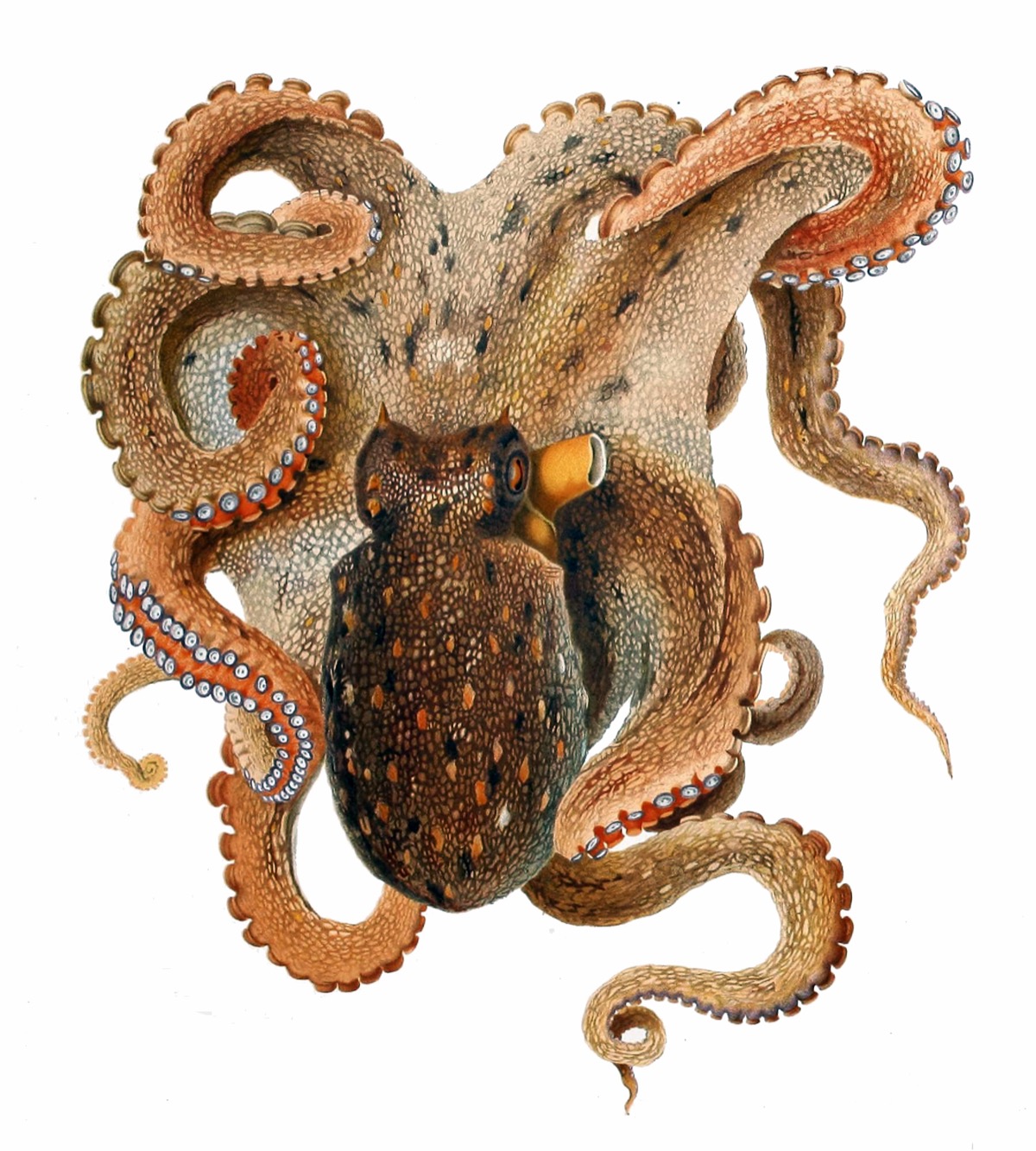
The common octopus (Octopus vulgaris) has a central brain of about 150 million neurons, but its total nervous system contains approximately 500 million neurons - around two-thirds of which are distributed across its eight arms. Each arm has its own neural cluster, a kind of sub-brain, that allows it to process sensory information and initiate movement independently of the central brain.
What this means in practice: If an octopus's arm is severed, it will continue to respond to stimuli, attempt to grip objects, and execute coordinated movement for up to an hour - without any connection to the central brain. The arm is not just a passive appendage; it has autonomous motor programs.
When an octopus reaches into a crevice to feel for prey, the arm navigates the space and processes tactile and chemical information locally. The central brain is informed of results, but the detailed motor execution is handled by the arm itself.
Three hearts, blue blood: Octopuses have three hearts - two branchial hearts that pump blood through the gills, and a systemic heart that circulates oxygenated blood to the body. Their blood is blue because it uses haemocyanin (copper-based) rather than haemoglobin (iron-based) to carry oxygen. Haemocyanin is less efficient at room temperature but works better in cold, low-oxygen environments.
Chromatophores: Skin colour and pattern changes are controlled by chromatophores - pigment-containing cells with muscles attached. The octopus contracts or relaxes these muscles to change colour and texture within milliseconds. Octopuses are colourblind, yet match their surroundings with remarkable precision - possibly by using light-sensitive proteins (opsins) distributed across the skin itself.
Lifespan: Most octopuses live only 1–2 years. After mating, females stop eating to guard their eggs and die shortly after hatching. Males also die shortly after mating. They pack an extraordinary amount of learning and adaptation into a very short life.