TWIL #061 - The Woodpecker's Skull Is an Anti-Concussion Engineering Marvel
A woodpecker strikes a tree at up to 25 km/h, 20 times per second, delivering an impact force of around 1,200 g - and never gets a concussion. Its skull is a multi-layer shock absorption system.
- #animals
- #biology
- #nature
- #engineering
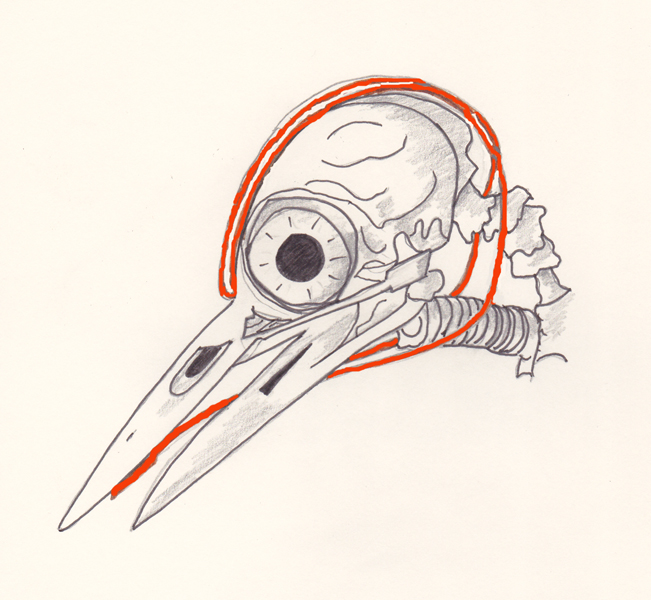
A woodpecker's beak strikes a tree at speeds up to 25 km/h, 20 times per second, decelerating at roughly 1,200 g on each impact. For context, a human loses consciousness at around 4–6 g sustained; a concussion threshold is typically cited at around 80–100 g for brief impacts. The woodpecker absorbs forces 10–15 times higher, thousands of times daily, without apparent brain injury. Here is how:
1. Unequal beak length: The upper and lower mandibles are different lengths - the lower is longer. On impact, this asymmetry deflects the force downward and away from the skull's direct axis, distributing stress unevenly so it doesn't transmit straight to the brain.
2. Hyoid bone - a full skull wrap: The hyoid bone in most vertebrates is a small U-shaped bone in the throat. In woodpeckers, it is dramatically elongated and wraps completely around the skull, extending over the top of the head and reaching toward the nostril. It acts as a seatbelt for the brain, absorbing and distributing impact energy through its length before it reaches the cranium.
3. Spongy bone structure: The skull contains more spongy (trabecular) bone than typical birds, particularly concentrated at the front. This porous structure absorbs compressive force the way crumple zones absorb impact in cars.
4. Thick skull musculature: Strong muscles around the skull act as additional dampening.
5. Tiny brain with minimal space: The woodpecker's brain is very small relative to its skull cavity and is packed tightly against the skull with very little cerebrospinal fluid. This minimises the sloshing motion that causes concussion - unlike in humans, where the brain can move within fluid.
The engineering implication: Woodpecker skull microstructure has inspired research into helmet design, protective padding, and aerospace vibration dampening. Studies published in journals including Bioinspiration & Biomimetics have extracted structural principles directly from woodpecker skulls for application in impact protection systems.