TWIL #071 - Your Brain Cleans Itself - But Only During Sleep
The glymphatic system is a waste-clearance network that flushes toxic proteins from the brain. It is almost entirely inactive when you are awake. This is why sleep deprivation accelerates neurodegeneration.
- #biology
- #neuroscience
- #medicine
- #health
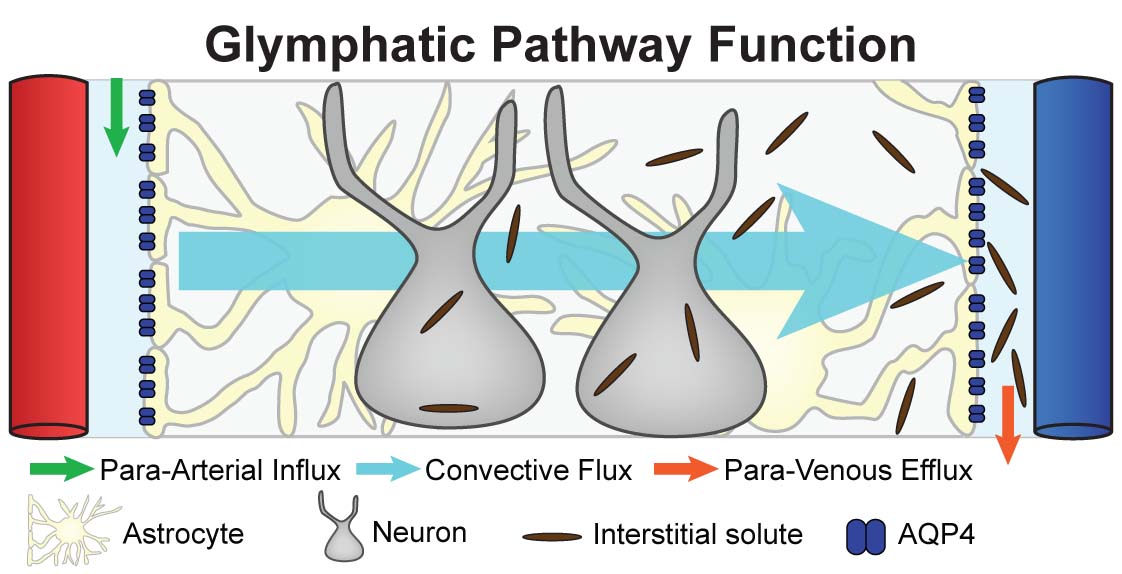
The brain produces metabolic waste as a by-product of normal neuronal activity - including amyloid-beta and tau proteins, the abnormal accumulations of which are hallmarks of Alzheimer's disease. For decades, it was unclear how the brain cleared this waste, since it lacks conventional lymphatic vessels.
In 2012, neuroscientist Maiken Nedergaard and colleagues at the University of Rochester described the glymphatic system - a network of channels surrounding blood vessels in the brain, lined with glial cells (specifically astrocytes). Cerebrospinal fluid (CSF) flows through these channels, driven partly by the pulsation of arterial walls, flushing waste products out of brain tissue and into the venous system.
Why it only works during sleep: In 2013, Nedergaard's lab published a follow-up paper in Science showing that the interstitial space in the brain - the gap between cells - expands by about 60% during sleep. This dramatically increases the flow of CSF through brain tissue and the efficiency of waste clearance. During wakefulness, the channels are constricted and glymphatic flow is minimal.
The implication is that sleep is not simply a period of reduced brain activity - it is an active maintenance process. The brain uses this window to flush the toxic debris that accumulates during the metabolically intensive business of being awake.
Connection to Alzheimer's: Amyloid-beta is significantly elevated in the brain tissue of people with chronic sleep deprivation. A 2017 study by the NIH found that a single night of sleep deprivation measurably increased amyloid-beta accumulation in the human brain, in regions associated with Alzheimer's risk. This does not prove that poor sleep causes Alzheimer's, but the mechanism - impaired glymphatic clearance - provides a plausible pathway.
Sleep position: Animal studies suggest that glymphatic flow is most efficient in the lateral position (sleeping on your side) compared to sleeping on your back or front. This has received popular attention, though its translation to clinical advice in humans is still under study.